Kentucky report: Data centers could bring billions, but state must protect ratepayers
LEXINGTON, Ky. (WKYT) - A new policy analysis says Kentucky is well-positioned for data center investment—but warns existing electric customers could pay for costly infrastructure without clear rules up front.
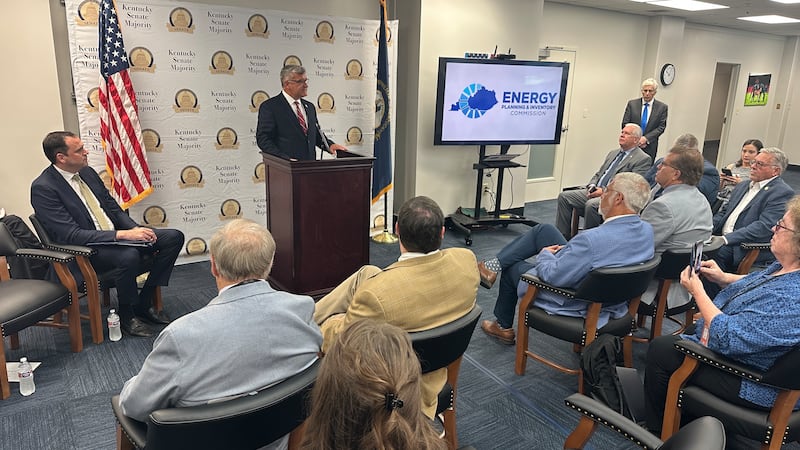
The report was produced by the Kentucky Energy Planning and Inventory Commission. EPIC says Kentucky’s advantage includes some of the nation’s lowest industrial electricity rates, available land, abundant water resources, expanding fiber infrastructure and a regulatory system with a track record of supporting large economic development projects.
EPIC frames its central question this way: it’s not whether data centers should locate in Kentucky—it’s how Kentucky can integrate them into the electric system without shifting costs to other customers or risking reliability.
Why data centers matter for the electric grid
Data centers operate 24/7 and require huge amounts of electricity for servers, cooling, and redundancy systems.
- EPIC says a 100-megawatt data center can use about as much power as the continuous average demand of roughly 80,000 homes.
- The report also notes many large facilities include major on-site backup power. EPIC says common standards call for Tier III sites to keep 72 hours of on-site fuel and Tier IV sites 96 hours, raising questions about how backup generation fits into statewide planning and emergency operations.
Kentucky’s pipeline is accelerating
EPIC describes a rapidly expanding development pipeline across multiple utility territories.
- Kentucky currently hosts 37 data centers across nine markets, including 24 in Jefferson County, according to the report.
- LG&E/KU told the Kentucky Public Service Commission in March 2026 it had 29 potential data center projects in its pipeline. EPIC says 11 projects—totaling about 3.5 GW—had a 50% or higher likelihood of moving forward.
- EPIC cites statements indicating the total prospective demand discussed in LG&E/KU territory could reach about 12 GW.
- EPIC also reports EKPC has 11 active data center projects seeking more than 10 GW of power.
For context, EPIC notes federal data shows Kentucky utilities generated a maximum of 18.4 GW in the summer of 2024.
One high-profile example: EPIC highlights a planned hyperscale campus in southwest Louisville, announced in January 2025. The report says LG&E secured an initial 335 MW, later expanding to 402 MW, with projected lifetime investment around $11 billion. The first 130 MW phase is targeted for late 2026.
The key risk: who pays for new infrastructure?
Because Kentucky is a regulated, vertically integrated utility state, EPIC notes utilities have an obligation to serve customers in their territories. That means utilities can be required to build generation, substations, or transmission upgrades to serve large new loads.
EPIC warns that if those investments enter the utility rate base, costs can be recovered over decades through customer electric bills—unless tariffs and contracts are structured so the new load pays for the infrastructure it triggers.
EPIC’s repeated point: cost allocation rules need to be established before major investments are approved, because once projects are deemed “used and useful,” the report says regulators have limited tools to reassign costs later.
[READ THE FULL REPORT BELOW]

What other states did when growth arrived fast
EPIC points to other states as cautionary examples:
- Virginia: EPIC cites proceedings that projected potential residential bill increases of $14 to $37 per month by 2040, with data center growth identified as a significant factor in multiple cases. EPIC says Virginia later approved a new rate class requiring large data centers to sign long-term contracts with minimum billing requirements, and lawmakers passed legislation allowing certain capacity costs to be shifted away from residential customers.
- Ohio: EPIC highlights AEP Ohio’s 2025 large-load tariff, which included study fees, collateral requirements, minimum billing floors, and long contracts. EPIC says utility filings reported speculative requests dropped by about 50% after the tariff took effect.
- Texas: EPIC cites the growth of a property tax incentive program from about $130 million in 2021 to more than $1 billion annually by 2023, prompting lawmakers to restructure it with caps and tighter rules.
What EPIC says Kentucky should watch next
EPIC outlines areas it says would strengthen planning as projects move from speculative to committed, including:
- a statewide large-load demand forecast across all utility territories
- standardized grid-impact assessment methods
- Kentucky-specific research on demand flexibility potential
- monitoring the fiscal impact of data center tax incentives as projects come online
Copyright 2026 WKYT. All rights reserved.