Diary of an ER Doctor: 'Compassion fatigue' plaguing career
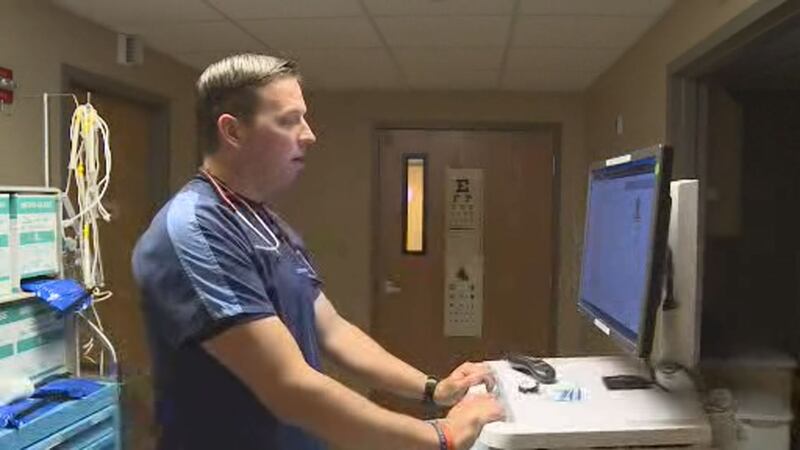
Most people can remember each time they've had to go to the emergency room. While it's not a good day for you, you hope it is a good day for your doctor.
Dr. Ryan Stanton works out of the Baptist Health emergency department in Lexington. He kept a video diary for WKYT, documenting a three-day weekend of overnight shifts in the Baptist Health emergency room.
Stanton checked in when possible.
Throughout the night, there is humor, and an obvious respect for the workload.
The next night wouldn't fall in Stanton's 'comfortable' range. He didn't have time to update us, until halfway through his shift.
We did this diary, to experience what Stanton isn't trained for as much, the emotional toll of constant exposure to trauma.
"If you think of it like a rock hammer, constantly picking at a mountain, you may not notice it at first, but eventually you are going to eat away at the mountain," Stanton told WKYT's Miranda Combs.
Stanton said it's called 'compassion fatigue,' associated with frontline responders. The people that see bad things, sad things, over and over again.
"If you lived that 160 to 170 shifts per year, that's 2,000 hours of exposure to this type of thing every year," he said.
This career, Stanton said, has one of the highest rates of substance abuse and suicide.
"It does take a significant toll, overtime and that's why there's so much burnout in emergency medicine."
On the second night, 28 patients, in nine hours.
"It's been one of these nights where basically we wrapped up pretty exhausted. So I don't think it will be any trouble getting some sleep," Stanton told the video diary from his car before he headed home.
Stanton said this compassion fatigue is part of the reason the job in general has become a tough sell. 140 million patients come through an ER a year in the US, pair that with a predicted doctor shortage of 100,000 over the next ten years.
"Our volumes are going up, pressures from all areas of medicine are going up," he said.
But Stanton also said there is a shift.
"It's finally turning on the light to recognize we've got a problem," he explained. There's an emphasis nationally to taking care of the people that take care of the sick. "If we aren't healthy, if we aren't taking care of ourselves, if we aren't fully engaged then we're not going to provide you the best care."
Physicians organizations are teaching doctors how to deal with the job they love.
"The key is basically resetting yourself every time you walk into a room," Stanton said.